

Booking gala and fundraiser entertainment in Canada comes down to four decisions: what the entertainment is supposed to do for the room, how long it plays, who supplies sound and staging, and how far the act has to travel. Shortlist two or three acts, send each the same run of show, then compare quotes on identical terms.

That last step is where most first-time gala bookings go sideways. Two quotes for “one hour of entertainment” can differ enormously because one includes a sound system, a technician and a soundcheck and the other assumes your audiovisual vendor handles all of it. Before you email anyone, decide what you are actually buying. Then browse performing artists on AGNT and put the same brief in front of each of them.
Start with the job, not the act
Gala entertainment does one of four jobs. Pick the job first and the category of act narrows itself.
- Fill the reception. Guests arrive over forty-five minutes, mingle, bid on the silent auction. You want roving or ambient performance that works without a stage, without a fixed start time, and at a volume people can talk over.
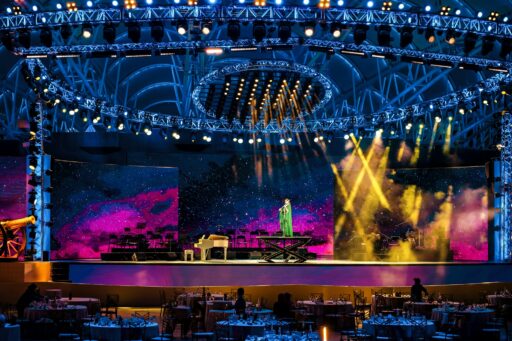
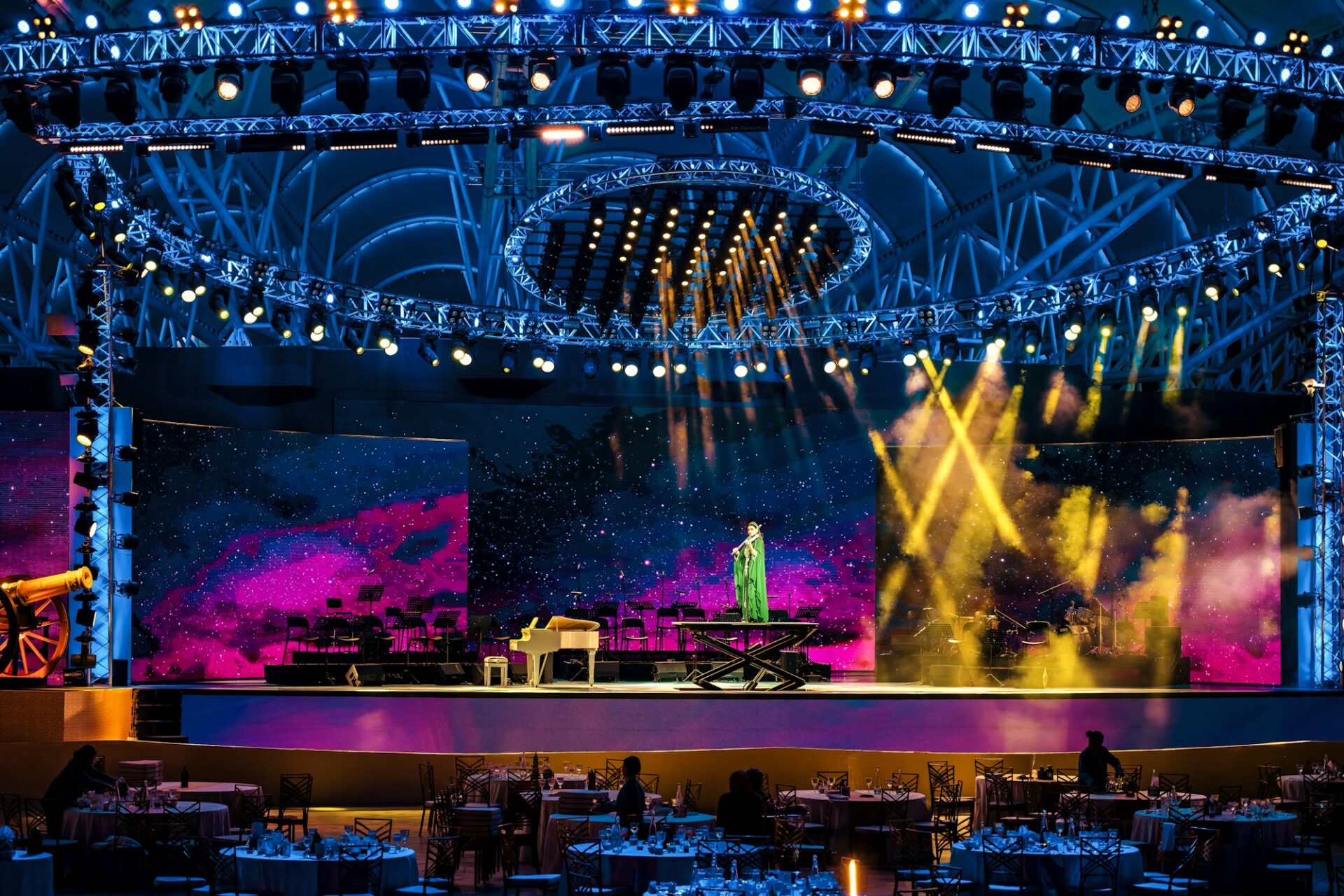
- Anchor the program. A single feature set between dinner and the ask, or after the awards. This needs a real stage, real sound, and a slot protected in the run of show.
- Carry the room through the ask. Some fundraisers use a performer as an emotional pivot immediately before the donation moment. This is a programming decision, and it changes who you hire.
- Turn the ballroom into a dance floor. Post-program, a DJ or a high-energy band keeps guests in the room instead of drifting to the hotel bar.
A large gala often needs two or three of these, and they are not the same hire. Trying to get one act to cover reception, feature set and dance floor is how you end up with an exhausted performer and a flat evening.
What actually moves the cost
There is no honest single number for gala entertainment in Canada, because the same performer will quote very differently for a Tuesday afternoon donor lunch and a Saturday black-tie dinner in another province. These are the variables, roughly in order of how much they swing a quote:
- Number of performers. A solo act versus a five-piece versus a full ensemble with a stage manager is the biggest single lever you control.
- Travel and accommodation. Flights, ground transport, hotel rooms and per-diems for every person on the contract. Booking a Vancouver act for a Halifax gala is a fundamentally different purchase from booking someone local.
- Set length and number of sets. Two thirty-minute sets with a break is more demanding on the artist than one forty-five-minute set, and it is often priced accordingly.
- Day and date. Saturdays in gala season are the scarcest inventory in the country. Weeknights and daytime events are easier to fill and easier to negotiate.
- Sound, lighting and staging. Who supplies the PA, monitors, microphones, risers and follow spot? If the act brings production, it is in their quote. If the venue’s in-house audiovisual vendor supplies it, it is in theirs.
- Venue labour rules. Convention centres and some hotel ballrooms require house or union stagehands for load-in, rigging and power. That cost lands on your budget, not the artist’s, and it is easy to miss until the venue’s estimate arrives.
- Early load-in and long hold times. If the room must be clear for a plated dinner, the act may need to load in mid-afternoon and then wait four hours. That hold is chargeable time.
- Overtime and encores. A program that runs long is normal. Overtime is usually billed per fifteen or thirty minutes, and the rate should be agreed before the night, not asked for at eleven o’clock.
- Rehearsal, soundcheck and custom content. Learning a chair’s favourite song, cutting a walk-on cue for each award recipient, or scripting around your case for support is real preparation time.
- Third-party fees. Some artists work through managers or representatives who add their own administrative charges, and some venues charge a fee for outside performers using house power or the stage.
When you request a quote, ask for it broken out: performance fee, travel, accommodation, production, and anything conditional. A single lump sum is impossible to compare against another single lump sum.
The questions to send with your request
Paste these into your first email. The answers will separate the acts who have played galas from the acts who have not.
- What is your quote for a [length] set on [date] at [venue, city], and what is included in that figure?
- Do you bring your own sound system and technician, or do we need to provide PA, monitors and microphones?
- What are your stage size, power and lighting requirements, and how much clear space do you need?
- How long is your load-in and soundcheck, and what is the latest you can soundcheck if the room must be set for dinner?
- Who exactly performs? Are the people in your promotional material the people on stage that night?
- Have you performed at a seated fundraiser with a live ask? How do you handle a program that runs late?
- What is your overtime rate, and how is it authorised on the night?
- What travel and accommodation do you need, and how many people are travelling?
- Do you carry liability insurance, and can you provide a certificate naming our venue?
- What content should we know about in advance (language, themes, audience suitability) so we can brief our board and sponsors?
That last question matters more at a fundraiser than at any other kind of event. Your room contains major donors, sponsors, staff, and sometimes the people your organisation serves. Ask for a plain description of the act’s content and make the call yourself rather than discovering it live.
What to confirm in writing
Verbal agreements collapse at exactly the wrong moment. Before you release a deposit, get all of this in a signed document:
- Named performers. Who is contracted to appear, and what happens if one of them cannot. A substitution clause that requires your written approval protects you from a headliner quietly becoming a stand-in.
- Exact call times. Load-in, soundcheck, doors, downbeat, set end, load-out.
- Deposit and balance schedule. How much, when, by what method, and what the balance is contingent on.
- Cancellation and postponement terms in both directions. What you owe if you cancel at various distances from the date, and what happens if the artist cancels. Postponement is separate from cancellation. A date change should carry its own clause, with a stated window to rebook.
- Weather and travel failure. Canadian gala season includes February. Agree in advance what happens if a flight is cancelled, and whether the artist will travel a day early at your cost or yours to absorb.
- Technical rider. Stage dimensions, power, PA, monitors, lighting, dressing room, and who supplies each line. Send it to your venue and your audiovisual vendor the day you sign, not the week of.
- Insurance and certificates. Your venue will almost certainly ask.
- Recording, streaming and photography. Many organisations livestream the ask or cut a highlight reel for next year’s campaign. Permission for that is not automatic, and music licensing may apply.
- Hospitality. Meals for performers and crew, and whether they eat with guests or before service.
Five ways a first gala booking goes wrong
The program eats the set. Speeches, awards and the ask always run long. If entertainment is scheduled last, it gets cut to ten minutes for a room that is already half-emptied. Fix: place the feature set before the final speaking block, and give your MC a hard time cue in writing.
Nobody owns sound. The artist assumed the venue had a PA; the venue assumed the artist brought one. Fix: name the sound supplier in the contract, and introduce the artist to your audiovisual contact by email as soon as you sign.
The act is wrong for a seated dinner. A performance built for a standing, drinking crowd can die in a ballroom of round tables at dessert. Fix: ask specifically what the act does with a seated, mixed-age, black-tie audience.
Travel gets discovered late. The quote looked fine until four flights, two hotel rooms and airport transfers were added. Fix: ask for travel as a separate line from the first email, and price a comparable local act as a control.
One person holds all the details. The volunteer chair who arranged everything is unreachable at six p.m. on show day. Fix: one written run of show, distributed to venue, audiovisual vendor, MC and artist, with a single on-site contact and phone number.
When to book
Canadian gala season runs in two waves: late September through November, and February through May. December is not gala season so much as corporate holiday party season, and it competes for the same performers, the same ballrooms and the same audiovisual crews.
For a Saturday in either wave, start six to nine months out: the same lead time you would give a hotel ballroom or a convention centre. Popular acts and the strongest Saturdays go first. Weeknight and daytime fundraisers can often be built in two to three months. If your date is inside six weeks, lead with the date and the budget in your first message rather than a long description of your cause; acts with a hole in the calendar will answer quickly, and everyone else will decline quickly, which is equally useful.
Examples of the kinds of acts galas hire
These are illustrations of the categories described above, drawn from listings on AGNT. Nobody has been asked about your date. Schedules, travel and terms all get confirmed with the artist and their representatives after you request a quote.
1. Celebrity Imposters

A Vancouver-based impersonation and comedy act. Look-alike and character work suits a red-carpet themed reception, sponsor step-and-repeat photos, or a light comic lift between award presentations, where you want personality without a full stage production.
2. A Glorious King Of Pop Tribute

A Calgary tribute artist. Tribute sets are a common feature-slot choice for galas because the material is familiar to a wide age range, which matters in a room spanning board members and young professionals. Ask about set length options and stage size.
3. Wayne Jones

A Toronto improv comedian, actor, host and corporate team-builder. A host who improvises can carry the program between speeches and handle whatever the evening throws at it, which is most of what a gala MC is for.
4. Armored Combat Entertainment

A Calgary spectacle act. Staged combat is the sort of high-visual programming that works for themed fundraisers and for outdoor or festival-style events, but it carries the heaviest space and safety requirements on this list: confirm floor area, sightlines and venue approval early.
5. Kahtja

An Edmonton singer and pianist whose sound crosses genres. Solo formats are the simplest gala hire to schedule: fewer travel line items, a shorter load-in, and a set that can be trimmed if the program runs long. A practical option for Prairie fundraisers and smaller donor events.
6. DJ Kwake

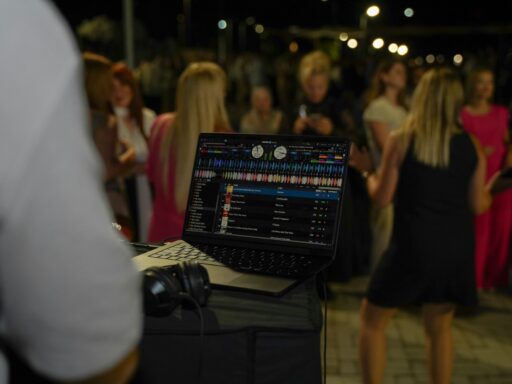
An Edmonton DJ with three decades across radio, mobile and club work, playing an open format. If your gala has a dance portion after the program, a DJ is usually the most flexible way to cover it: one supplier, a compact setup, and the ability to read a room that is still half in speeches mode.
Get quotes and compare on the same terms
Write your run of show, decide who supplies sound, then send one identical brief to two or three acts. Tell us your date, city, venue, set length and budget, and we will come back to you with a real quote after speaking with the artist and their representatives.
Get quotes from Canadian performing artists.
Frequently asked questions
How far in advance should I book gala and fundraiser entertainment in Canada?
Six to nine months for a Saturday in the autumn or spring gala waves, which is the same lead time as your venue. Weeknight and daytime fundraisers can often be arranged in two to three months. December is the hardest month of all because holiday party season competes for the same performers and crews.
How much does gala entertainment cost?
It depends entirely on the number of performers, how far they travel, set length, the day of the week, and whether sound and staging are in their quote or your audiovisual vendor’s. Ask every act for a quote broken into performance fee, travel, accommodation, production and overtime, so you are comparing the same thing twice rather than two lump sums.
Do I need an MC as well as a performer for a fundraiser?
Usually yes. The MC runs the clock, introduces speakers and hands off to the ask; the entertainment holds the room. Some performers will host as well, but treat it as a separate scope with its own briefing and its own line in the quote. An act asked to MC on the night without preparation will do neither job well.
Who supplies the sound system for gala entertainment?
Either the artist or the venue’s audiovisual vendor, and you must decide which in writing before you sign. Send the artist’s technical rider to the venue the day you book, confirm stage size, power and clear floor space, and schedule a soundcheck that finishes before the room is set for dinner.